Endoscopic carpal tunnel release
The endoscopic technique divides the transverse carpal ligament under video guidance, through a minimal incision, without opening the palm of the hand.
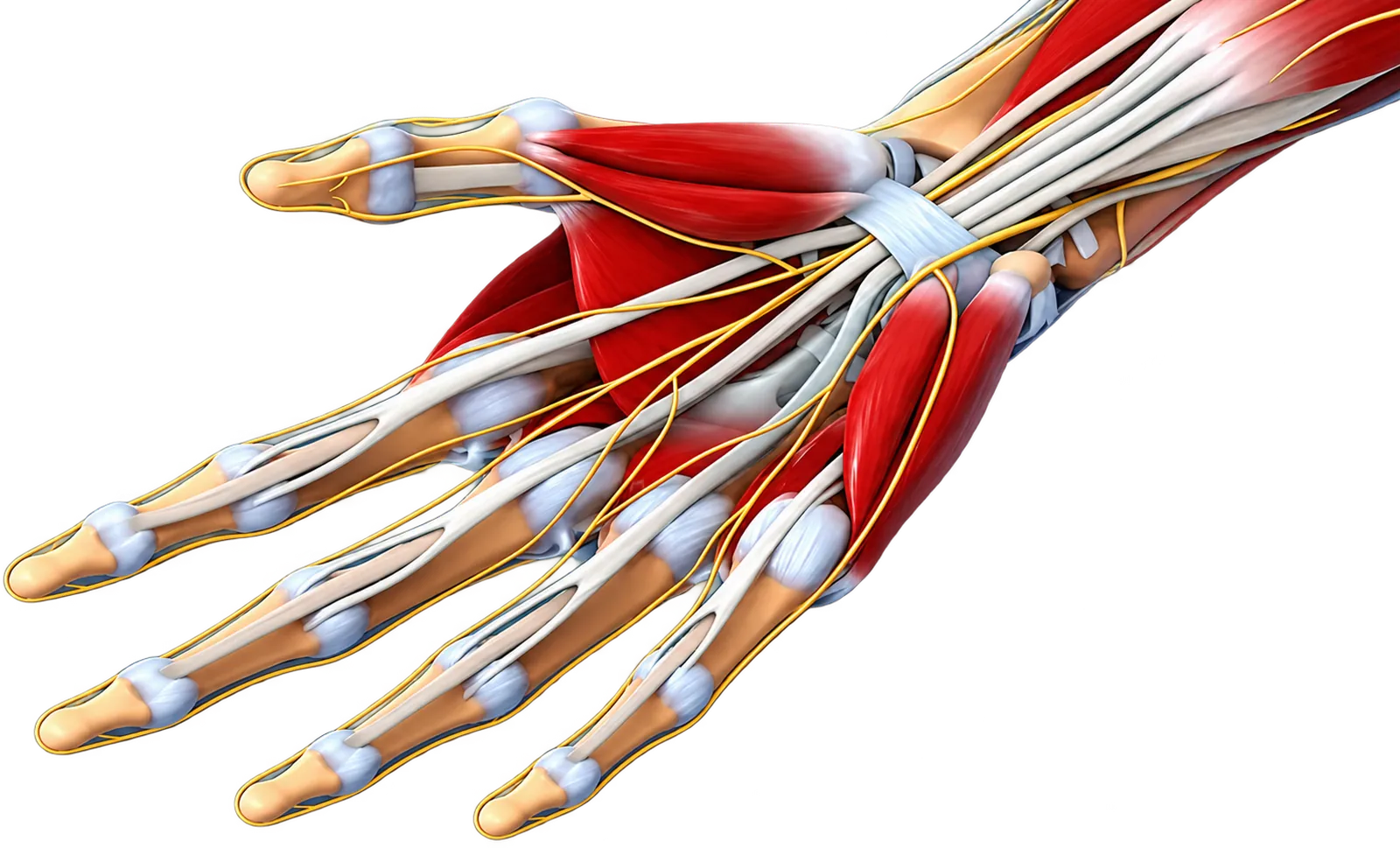
Endoscopic release uses a miniaturised system combining a camera and a retractable blade, introduced through a short incision at the wrist crease. The flexor retinaculum is divided under direct visual control, after identification of the median nerve and the tendons.
Its main advantage lies in preserving the tissues of the palm: the skin, palmar aponeurosis and structures at the heel of the hand are not incised. The result is a discreet scar and generally easier recovery.
The procedure is performed as day surgery, under regional or local anaesthesia, and takes a few minutes.
Endoscopic or open release?
Both techniques share the same purpose and give comparable long-term results in relieving nerve compression. The difference lies in the immediate recovery. Open release remains preferable in certain situations: unusual anatomy, previous wrist surgery, revision after failure, or significant tenosynovitis requiring an associated procedure. The choice is discussed during consultation.
Recovery
Finger movement is encouraged as soon as the anaesthetic wears off, to prevent swelling and stiffness. A simple dressing protects the scar, which should be kept dry. As after any carpal tunnel release, discomfort on pressure at the heel of the hand may appear: this is pillar pain, which is usual and self-limiting.
Frequently asked questions
Is endoscopic carpal tunnel surgery riskier?
Performed by a trained surgeon, it has a safety profile comparable to open release. Video guidance allows direct visualisation of the structures before the ligament is divided.
How large is the scar?
The incision is short and located at the wrist crease, which makes it barely visible once healed, unlike open release which crosses the palm.
Is the endoscopic technique suitable for everyone?
No. Certain situations point towards open release: revision surgery, anatomical variation, or the need for an associated procedure on the tendons. The indication is decided after clinical examination and review of investigations.
Is a general anaesthetic required?
No. The procedure is performed under regional anaesthesia, which numbs the arm, or under pure local anaesthesia depending on the context. There is no hospital stay.
Medical review
Written and medically reviewed by Dr Alexandre Kilinc, orthopaedic surgeon specialising in hand, wrist and upper limb surgery (RPPS 10100025286), registered with the French National Medical Council. Member of SFCM, SOFCOT, SECEC, AAOS and FESUM. Consultations and surgery at Clinique Jouvenet (Paris) and Hôpital Privé Claude Galien (Quincy-sous-Sénart).
This page is for information only and does not replace a medical consultation.
Last reviewed: 2026-08-21